
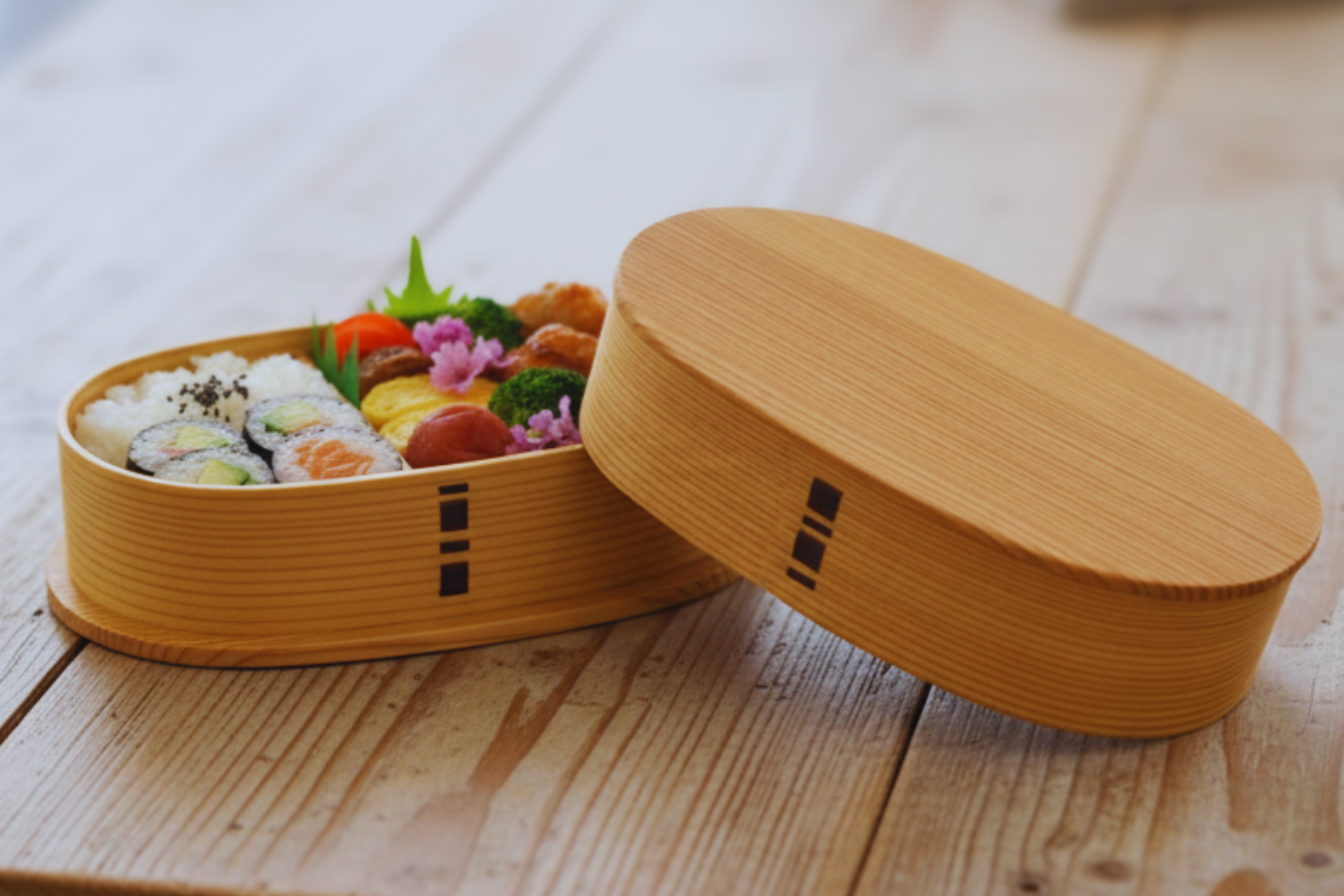
In Japan, a bento is more than a packed meal. It is a quiet expression of care, balance, and attention—offered not through words, but through arrangement, color, and restraint.
Within a small wooden box, seasonality is observed, nourishment is considered, and the person who will open the lid is gently imagined. This philosophy has shaped Japanese food culture for centuries.
In this article, we explore the history of Japanese bento and the traditional craft that has long supported it: Magewappa, the bentwood lunch box made in northern Japan.
1 | The History of Bento: From Edo Period to Today

Long before the word “bento” came into use, the practice of carrying food for journeys and daily labor already existed in Japan.

One of the earliest references appears in The Tales of Ise (Ise Monogatari), a poetic narrative from around the 10th century.
In one scene, travelers pause along their journey to eat hoshii—dried cooked rice prepared in advance and carried for sustenance.
Lightweight, durable, and easy to eat, this early form of portable food reflects a fundamental need that would shape Japanese food culture for centuries.
The Birth of the Word “Bento”
The origin of the word bento is often traced to the 16th century and the powerful warlord Oda Nobunaga.
Historical accounts suggest that Nobunaga provided meals to large numbers of people gathered at his castle, distributing simple individual portions.
These practical, pre-prepared meals were referred to as bento, meaning something prepared and set aside for convenience.
While the exact origin of the term remains debated, the idea is clear:
a meal prepared not for ceremony, but for people in motion.
Bento as a Tool of Everyday Life
For farmers, mountain villagers, fishermen, and townspeople, returning home for meals was often impossible.
Bento became an essential part of working life—carried into fields, forests, and along the coast.
The contents were humble but sustaining: rice, potatoes, preserved foods.
What went into a bento varied by region, climate, and livelihood, quietly reflecting the diversity of Japan’s landscapes and ways of life.
Edo Period: Bento Becomes Culture

During the Edo period (1603–1867), bento moved beyond necessity and into leisure and culture.
As townspeople began enjoying outings to the countryside, seasonal festivals, and theater performances, bento became indispensable.
It was during this time that the makunouchi bento developed.
The term makunouchi—literally “between the curtains”—refers to meals eaten during intermissions at kabuki theaters.
These bento boxes featured carefully arranged rice, side dishes, and seasonal elements, balancing nutrition with visual harmony.

Here, the bento became more than food.
It became a small, contained expression of Japanese aesthetics—order, balance, and thoughtfulness, all within a box.
2 | Magewappa: A Craft Born for Bento

▶︎Magewappa Bento Box "Umehana Bento"
Magewappa is a traditional Japanese woodcraft originating in Odate, Akita Prefecture, with a history of over 400 years.
Originally produced as a sideline by samurai families, these lightweight wooden containers gradually became the ideal vessel for carrying meals. Made primarily from Akita cedar, Magewappa naturally regulates moisture—absorbing excess humidity while preventing food from drying out.
Magewappa was not designed to impress. It was designed to work beautifully, day after day.
3 | How Magewappa Is Made: Quiet Precision

Each Magewappa lunch box is the result of careful, understated craftsmanship. Thin strips of cedar are softened with heat, gently bent into shape, and secured without nails or glue.
There is no excess decoration—only form, function, and respect for the material. This restraint allows Magewappa to age gracefully, developing character through daily use.
4 | The Everyday Beauty of a Magewappa Bento — Made for Your Way of Living

▶︎Magewappa Bento Box "Koban Bento" Middle
A Magewappa box is often associated with traditional Japanese meals—rice, grilled fish, and seasonal vegetables.
But its beauty lies in something much simpler: it adapts to the way you live.
You do not need to prepare a “perfect” Japanese bento to enjoy Magewappa.
Fill it with a warm soup and bread for a winter lunch.
Pack a sandwich, fresh fruit, and a small sweet for an afternoon break.
Use it to carry pastries, cookies, or homemade snacks when visiting a friend.

▶︎Magewappa Bento Box "Hana" Black
▶︎Magewappa Bento Box "Hana" Red
The soft warmth of natural cedar, its gentle scent, and its ability to regulate moisture make Magewappa suitable for many kinds of food—not only Japanese cuisine.
In a modern lifestyle, Magewappa becomes a quiet companion:
-
a lunch box for work or school
-
a container for picnics and travel
-
a thoughtful vessel for sharing food with others
There are no strict rules.
Only the invitation to slow down and enjoy what you carry.
Many of the Magewappa boxes we carry are still made in Odate using traditional techniques, yet they fit naturally into contemporary life.
This balance—between heritage and freedom—is what makes Magewappa timeless.
👉 Explore our Magewappa collection and imagine how you would use it.
5 | Magewappa as a Meaningful Gift

A Magewappa bento box is not tied to trends or seasons. It suits any age, any lifestyle, and grows more beautiful with time.
To give Magewappa is to offer something rare: a tool that encourages care, simplicity, and daily appreciation.
Epilogue | Bringing Japanese Craft into Daily Life
Magewappa is inseparable from the history of Japanese bento. Together, they reflect a way of living that values quiet craftsmanship and intentional nourishment.
Whether for yourself or someone you cherish, a Magewappa bento box is an invitation to live a little more deliberately—one meal at a time.
→ Explore our curated Magewappa collection
A thoughtful gift for the holiday season — crafted to be used for years.