
A Master of Light, Season, and Silence
Introduction | Where Time Slows Down

Walking through Kyoto’s old streets, time can feel as if it slows down. Shadows stretch across stone paths, light lingers in narrow alleyways after rain, and temple grounds hold a stillness that is hard to name yet impossible to forget.
Kato Teruhide (1936–2015), a Kyoto-born woodblock print artist, devoted his life to capturing these fleeting atmospheres in print. Working within the tradition of Japanese woodblock printing, he created images that do not shout for attention but quietly invite you in, revealing new subtleties each time you look.
This article traces Kato’s artistic journey and introduces the works offered for collectors who appreciate art that transforms a space gently rather than dominating it.
1 | The Artist Behind the Work

Born in Kyoto in 1936, Kato Teruhide followed a path that was anything but straightforward on his way to becoming a celebrated woodblock print artist.
He studied Japanese painting at an art college in Kyoto, building a strong foundation in composition and traditional aesthetics. Instead of moving directly into printmaking, however, he spent many years designing kimono patterns, a field in which he developed a refined sensitivity to rhythm, negative space, and the subtle interplay of color.
That background in textile design became a crucial part of his artistic identity. When Kato later committed himself to woodblock prints, he brought with him a visual language that blended classic Japanese sensibility with a distinctly contemporary eye.
His works evoke the atmosphere of Kyoto itself—the weight of the air, the quality of the light, and the quiet shift from one season to the next.
2 | The Art of Quietness
The most striking first impression of Kato’s work is its quietness. It is not an empty quiet, but a silence with weight, in which every shape, line, and interval matters.

"Encounter with umbrella" by Kato Teruhide
Black, White, and Everything Between
Many of his compositions build on strong contrasts of black and white. Onto these foundations, he introduces carefully measured color: a hint of blue, a soft grey wash, or the warm tones of late autumn.
Rather than filling every area with information, he lets unprinted paper and open space do much of the work. This restraint gives his images their calm presence.
Seasons Suggested, Not Announced
Cherry blossoms, turning maple leaves, temple roofs under snow—Kato often chose classic Kyoto motifs, yet he rarely presented them in an obvious way.
Seasonal elements appear as suggestions, leaving room for the viewer’s own memories and associations.

A spring composition featuring cherry blossoms. Negative space and clean lines evoke Kyoto’s seasonal atmosphere with quiet clarity.
3 | Where Tradition Meets Contemporary Vision

Kato’s prints were created using traditional Japanese woodblock techniques in collaboration with Kyoto-based publishers, including the renowned house Unsodo.
Carvers and printers translate the artist’s design into multiple blocks and layers of pigment, applied carefully to handmade washi paper.
Despite these traditional foundations, Kato’s prints feel unmistakably modern. Bold cropping, simplified forms, and graphic composition reveal a contemporary sensibility rooted in craft.
4 | Recognition at Home and Abroad
Though based in Kyoto throughout his life, Kato’s work reached international audiences. By the late twentieth century, his prints were exhibited overseas, including in New York.
His work resonated across cultures by expressing stillness, transition, and restraint—universal experiences conveyed through a Kyoto lens.
5 | Living with Kato’s Prints
Japanese woodblock prints were historically intended to be lived with, and Kato’s works reveal their full character in everyday spaces.
They bring calm and visual balance to both contemporary and traditional interiors, changing subtly with light throughout the day.

A quiet passage through Fushimi Inari Shrine.
Repetition, perspective, and restrained color create a sense of calm movement.
6 | The Prints We Offer
For many years, Kyoto Handicraft Center has been working with Unsodo, one of Kyoto’s most respected traditional woodblock print publishers, to handle and present the woodblock prints of Kato Teruhide.
At our Kyoto physical store, Kato’s works have long been among the most well-received by both Japanese and international visitors, and he remains one of the artists most closely associated with the quiet, refined atmosphere of Kyoto.
We now offer a carefully selected group of Kato Teruhide’s most popular works through our online store. Each print is produced using traditional hand-printing techniques by Kyoto artisans, printed on carefully chosen washi paper, and made to standards suitable for long-term enjoyment and preservation.
These are works that have remained consistently popular at our Kyoto store over many years, now made available to collectors around the world.

▶︎ View Available Prints by Kato Teruhide
7 | Vertical Rhythm and Quiet Proportion

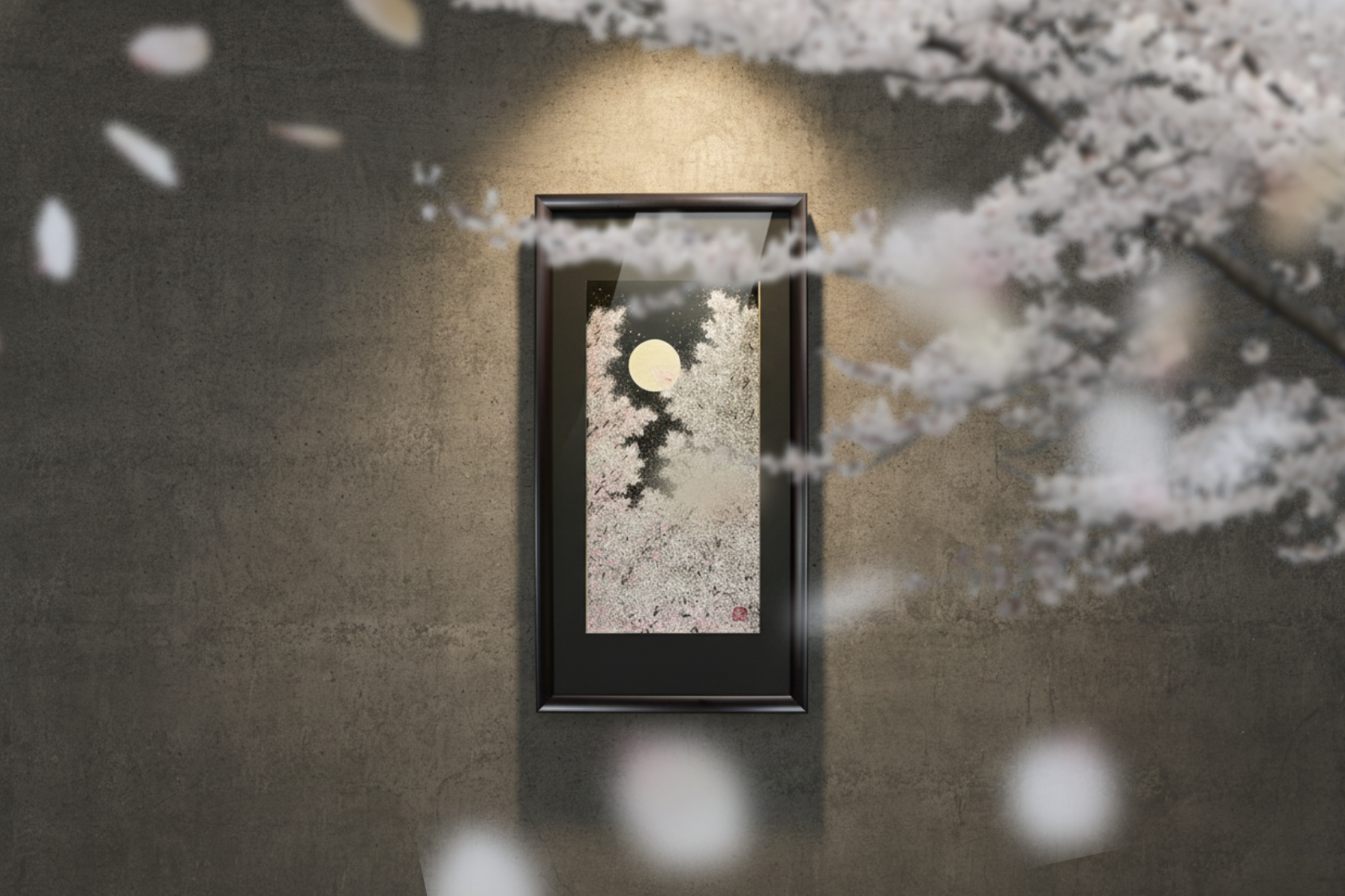
"Blue moon" by Kato Teruhide
apanese woodblock prints were historically created to be lived with, and Kato Teruhide’s works reveal their full character when they become part of everyday spaces.
One reason his prints have remained consistently popular at our Kyoto store over many years is their strong sense of proportion. Many of Kato’s most well-received works take a vertical format, a choice that feels both natural and intentional.
This verticality echoes the rhythms of Kyoto itself—narrow streets, temple pathways, rows of torii gates, and the measured progression of steps and shadows. Rather than presenting a scene all at once, these compositions guide the eye slowly forward, encouraging a calm, reflective way of looking.
In interior spaces, vertical prints are especially versatile. They sit comfortably in areas where wall space is limited, such as entryways, corridors, or beside windows and shelves. In both contemporary Western interiors and traditional Japanese rooms, they offer presence without visual weight, adding depth while preserving a sense of openness.
Throughout the day, a Kato print changes subtly with the light. Morning light may soften the colors of the washi paper, while evening light deepens contrast and emphasizes structure. This quiet responsiveness to time and atmosphere is part of why collectors often find themselves returning to these works again and again.
Living with a print by Kato Teruhide is not about making a statement. It is about creating a rhythm—one that aligns with daily life and gently invites moments of pause and attention.
8 | What It Means to Bring a Print Home
Bringing home a woodblock print is more than acquiring an object. It is a way of inviting a particular quality of attention into everyday life.
Kato’s prints offer stillness that coexists with daily routines, creating moments of pause and reflection simply by being present on the wall.
Epilogue | Kyoto’s Memory, Continuing

The Kyoto that artists have observed and interpreted through woodblock prints continues to change, yet its underlying character endures.
Within the tradition of Kyoto woodblock printing, each generation has found its own way to translate the city’s light, seasons, and quiet rhythms into paper and pigment. Kato Teruhide’s works stand as one expression within this broader lineage—rooted in tradition, yet shaped by a distinctly modern sensibility.
Through Kyoto woodblock prints, this way of seeing remains alive in homes and collections around the world, carried forward not through spectacle, but through calm presence and attentive looking.