
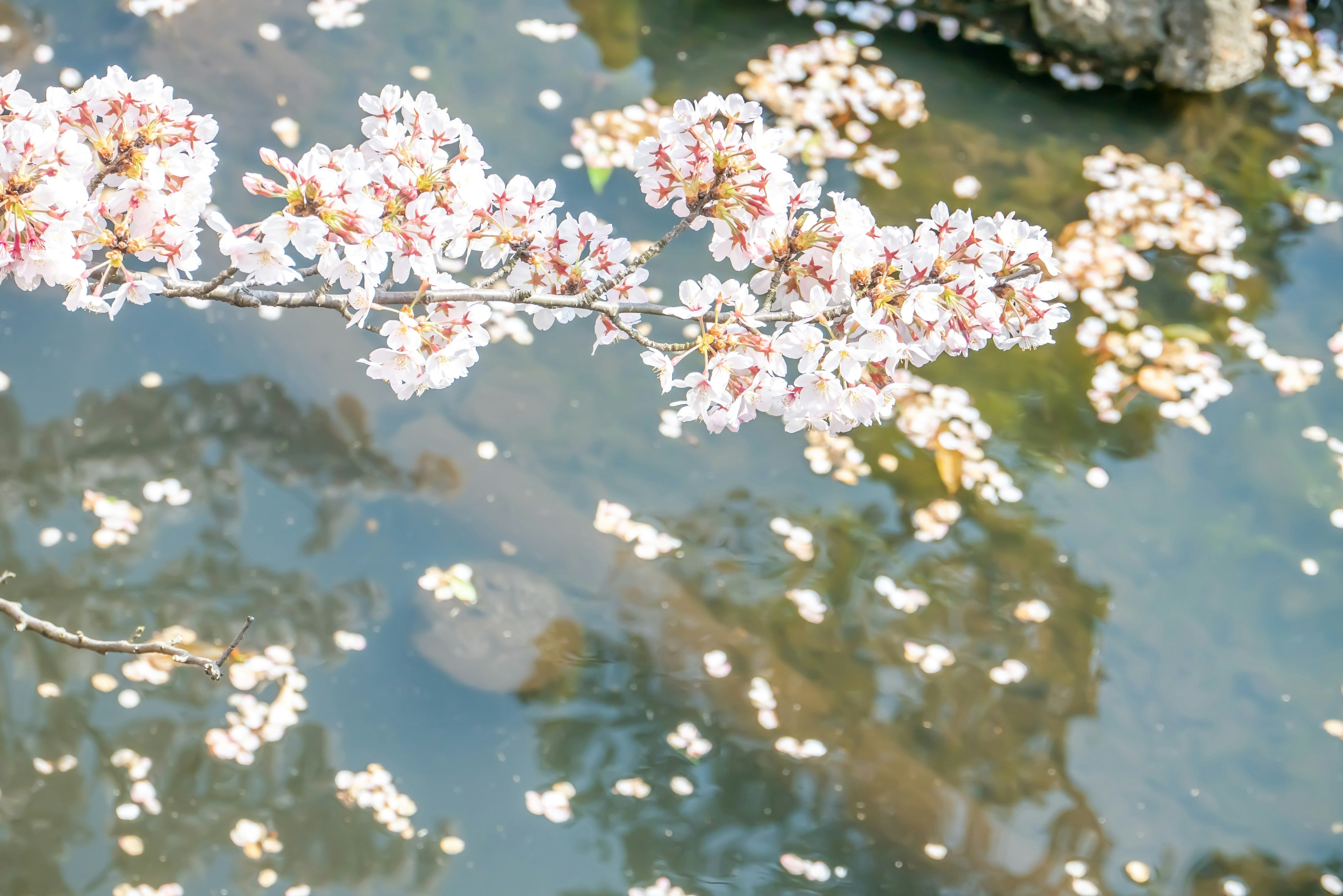
When people think of Japan, one flower often comes to mind: sakura, the cherry blossom.
Every spring, the whole country turns soft pink. Parks, riversides, temples, and city streets are lined with blooming trees. For a short time, daily life slows down. People gather under the blossoms, share food, and enjoy the season together.
As a symbol of Japanese spring, sakura is widely regarded — alongside the chrysanthemum — as one of the national flowers of Japan. Both in Japan and abroad, cherry blossoms have become one of the most recognizable images of the country.

Sakura Around the World
Cherry blossoms, however, bloom far beyond Japan. Cherry trees belong to the genus Prunus. Wild species grow across China, Europe, the Himalayas, and North America.
In Washington, D.C., thousands of cherry trees were gifted by Japan in 1912. Today, they bloom each spring around the Tidal Basin and attract visitors from around the world.
Cities such as Vancouver and Bonn are also known for their beautiful cherry blossom streets.
Most of these iconic trees are a Japanese cultivar called Somei Yoshino.
The Sakura the World Knows
Somei Yoshino was developed in Japan during the Edo period by crossing two different varieties of cherry trees: Edo-higan and Oshima-zakura. It was first cultivated in a village called Somei, in what is now Komagome, Tokyo — which is how it received its name.
Somei Yoshino
Unlike many wild cherry trees, Somei Yoshino cannot reproduce on its own through pollination. For generations, it has been propagated by human hands through grafting. In other words, the Somei Yoshino trees blooming across Japan — and around the world — are essentially clones of the original.
In a way, they are all siblings.
Without continued care and cultivation, this beloved variety would gradually disappear. Somei Yoshino is not only a symbol of spring — it is also a quiet reminder of the deep relationship between nature and human hands.
But Spring in Japan Has Many Layers
Yet, of course, Somei Yoshino is not the only sakura in Japan.
Spring here is not defined by a single tree.
Weeping cherries (shidare-zakura), wild mountain cherries (yamazakura), and many other varieties bloom in their own time.
Shidare-zakura
Yamazakura
In early April, Somei Yoshino, shidare-zakura, and yamazakura often reach their peak together, creating the familiar image of Japanese spring. As their petals begin to fall and a quiet sense of passing lingers in the air, another variety appears.
Yaezakura — with its rich layers of blossoms — blooms slightly later, adding a final note of color and fullness to the season.
Yaezakura
This gentle progression, from delicate simplicity to layered abundance, is part of what makes spring in Japan so distinctive.
More Than a Flower
In Japan, cherry blossoms symbolize:
-
The beauty of short moments
-
New beginnings
-
The passing of time
They appear not only in nature, but also in painting, lacquerware, ceramics, and textiles.
Byobu Folding Screen with 4 Panels "Cherry Blossoms"
Sakura is global.
But sakura culture is Japanese.
Bringing Sakura Into Everyday Life
At Kyoto Handicraft Center, we honor this tradition through carefully crafted works inspired by cherry blossoms.
From lacquerware adorned with delicate petals to tableware that brings a sense of spring to the table, each piece reflects Japan’s appreciation for seasonal beauty.
Small Lacquerware Box with Raden "Cherry Blossoms"
Cherry blossoms may last only a short time in nature.
Yet their meaning — renewal, grace, and the quiet awareness of passing time — can remain.
To bring sakura into your home is to carry a small part of the Japanese spring with you.
How would you welcome sakura into your own space?
→ Explore our Sakura Collection and discover the piece that speaks to you.🌸🌸🌸